


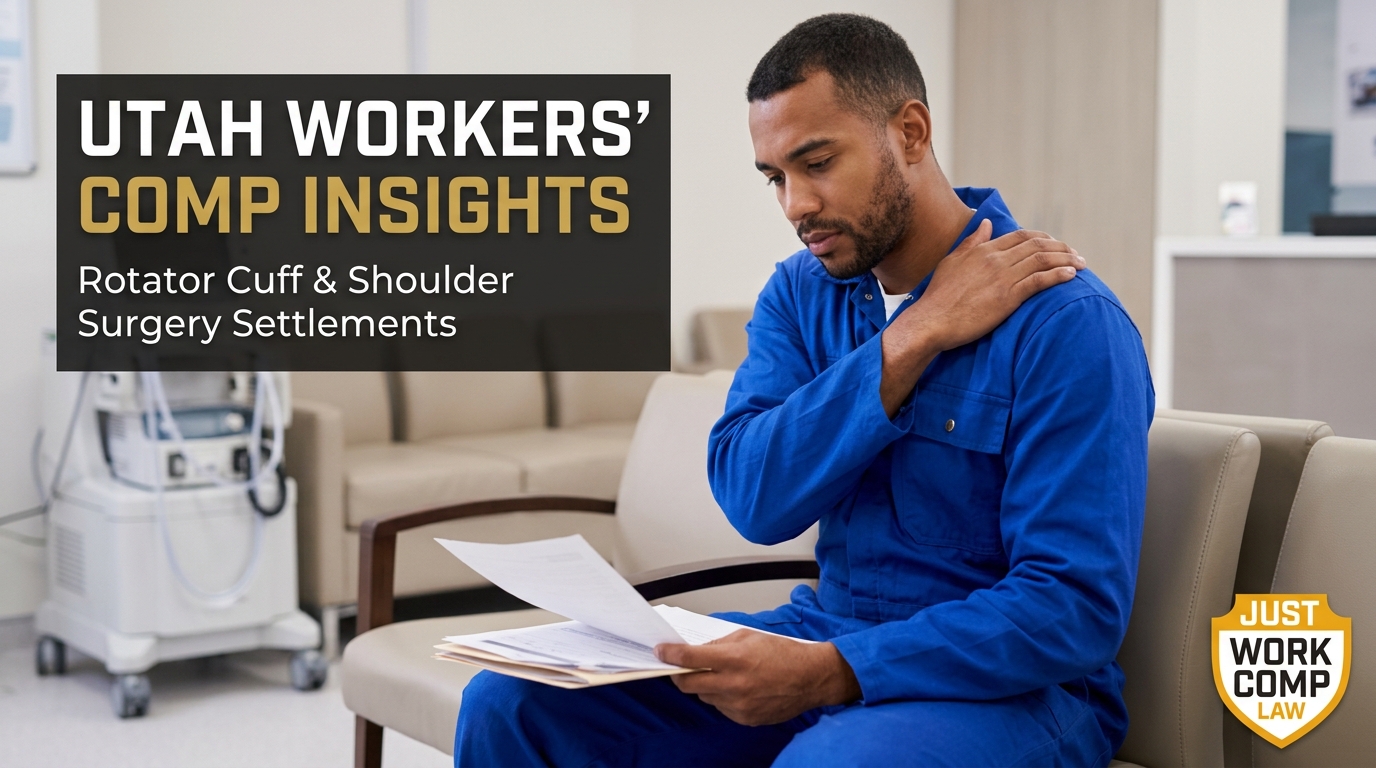
Rotator Cuff & Shoulder Surgery Workers’ Comp Settlements in Utah
Rotator cuff and bicep tears often occur together, especially in falls or heavy-lifting injuries, and a combined tear is generally worth more than either injury alone. When a worker tears both the rotator cuff and the long head of the bicep, the surgical repair is more involved, recovery takes longer, and the odds of a permanent impairment rating go up — all of which increase settlement value. A visible “Popeye” deformity from a detached bicep tendon can also support a permanent impairment finding even after surgery. Because combined rotator cuff and bicep tear claims involve more moving parts, having an attorney confirm the impairment rating and future-care needs is especially important before accepting any offer.
What Counts as a Major (Surgical) Shoulder Injury
Not every shoulder injury requires surgery, but the ones that do tend to be the most serious — and the most valuable in a workers’ compensation claim. A shoulder injury is generally considered “major” or surgical when the damage cannot heal on its own and an orthopedic surgeon recommends an operation to restore function. The most common surgical shoulder injuries we see in Utah and Idaho work-injury cases include:
- Rotator cuff tears — damage to the group of tendons and muscles that stabilize the shoulder, often from lifting, overhead work, or a fall.
- Labral (labrum) tears — tears in the ring of cartilage that holds the ball of the shoulder joint in place, frequently caused by dislocations or repetitive strain.
- Bicep tendon tears — including the “Popeye” deformity that appears when the long head of the bicep tendon detaches, leaving a visible bulge in the upper arm.
Because these injuries usually require arthroscopic or open surgery, extended physical therapy, and time off work, they typically carry higher settlement value than soft-tissue strains that resolve without an operation.
Injury Accident Settlement Calculator
Factors That Raise or Lower Your Settlement
Impairment rating, work restrictions, surgery type, future medical.
Two workers with the same diagnosis can receive very different settlements depending on the details of their case. Several factors push shoulder settlement value up or down:
- Permanent impairment rating — a higher percentage rating assigned by your doctor generally increases the value of your claim.
- Permanent work restrictions — if you can no longer perform overhead work or lift past a certain weight, the resulting loss of earning capacity raises value.
- Type and number of surgeries — a complex repair, a second surgery, or a failed first surgery typically increases value over a single routine arthroscopic procedure.
- Future medical needs — anticipated injections, hardware removal, or possible revision surgery add to the claim.
- Your wages and age — higher pre-injury earnings and a longer remaining work life can both increase the dollar value of permanent restrictions.
Major Work-Related Shoulder Injuries Requiring Surgery
Detail surgical shoulder conditions common in workplace accidents (heavy lifting, overhead tasks, falling from heights):
- Rotator Cuff Tears: Full-thickness and partial tears requiring arthroscopic or open repair.
- Labral (Labrum) Tears: Bankart or SLAP lesions resulting from dislocations or sudden traction.
- Bicep Tendon Tears: Distal or proximal tearing (including “Popeye” muscle deformity) often repaired alongside the rotator cuff.
How Utah Workers’ Comp Calculates Shoulder Surgery Benefits
Explain the three statutory benefit types under Utah law:
- Medical Coverage: 100% payment for diagnostic MRIs, surgical fees, anesthesia, post-op physical therapy, and pain management.
- Temporary Total Disability (TTD): Two-thirds of pre-injury average weekly wages paid while off work during surgical recovery.
- Permanent Partial Disability (PPD): Statutory compensation awarded after reaching Maximum Medical Improvement (MMI).
How Impairment Ratings Drive Shoulder Settlements
Once you reach maximum medical improvement the point where your shoulder is as healed as it is going to get your doctor assigns a permanent impairment rating expressed as a percentage. This rating is one of the single biggest drivers of your settlement, because it converts your lasting physical limitation into a dollar figure under Utah and Idaho’s workers’ compensation schedules. A higher rating, or a rating combined with formal work restrictions, generally translates into a larger permanent partial disability award. Because the first rating you are given is not always the final word, it is often worth having an attorney review it a second opinion or independent rating can materially change the value of a shoulder surgery claim.
Key Drivers of Utah Surgical Shoulder Settlement Value
Size of the permanent impairment rating (upper extremity/shoulder percentage under the AMA Guides).
Permanent work restrictions (e.g., no lifting over 15 lbs, no overhead reaching) that impact job capability.
Need for secondary or revision surgeries (e.g., hardware removal or total shoulder replacement).
Pre-existing shoulder conditions and how Utah law handles medical aggravation.
Utah vs. Idaho Considerations
While both Utah and Idaho compensate permanent shoulder injuries, the two states calculate and pay benefits differently, and those differences can affect your bottom line. Utah uses the American Medical Association impairment guidelines and its own statutory tables to convert a shoulder impairment rating into a permanent partial disability award, and it allows reopening of a claim in some circumstances. Idaho evaluates permanent impairment alongside a separate analysis of permanent disability that considers how the injury affects your actual ability to work. Because each state has its own deadlines, rating methods, and rules for future medical care, a shoulder settlement that is fair in Utah may be calculated very differently across the border in Idaho — making state-specific legal guidance important.
Combined Rotator Cuff and Bicep Tear Settlements
Explain why combined injuries carry higher settlement values due to longer surgical recovery times, increased TTD duration, and compound impairment ratings under the AMA Guides.
How Impairment Ratings Drive Utah Shoulder Settlements
Detail the process after reaching MMI. Explain how the treating surgeon or IME doctor assigns an upper extremity impairment rating, how that converts to a whole-person rating, and how Utah Code § 34A-2-412 calculates the statutory financial award.
Full & Final Settlements vs. Open Future Medical Care in Utah
Educate injured workers on the choice between settling a claim via a Full and Final Release (lump sum closing medicals) versus keeping medical rights open under Utah law, particularly when future shoulder hardware removal or joint replacement may be needed.
Frequently Asked Questions
Generally yes. Surgical cases involve higher medical expenditures, longer off-work recovery periods (TTD benefits), and a greater likelihood of a permanent impairment rating (PPD) compared to non-surgical soft tissue injuries.
You should generally wait until you reach Maximum Medical Improvement (MMI) and receive a final permanent impairment rating from a physician. Settling before surgical recovery is complete risks forfeiting coverage for unexpected complications or future care.
Permanent work restrictions (such as no overhead reaching or heavy lifting) demonstrate lasting disability. In Utah, restrictions strengthen your claim for complete impairment compensation and may trigger vocational rehabilitation or re-education considerations.
Yes, in almost every case, a shoulder claim that requires surgery settles for more than one that does not, because surgery signals a more serious injury, a longer recovery, and a greater likelihood of permanent impairment and work restrictions.
You should generally wait until you reach maximum medical improvement and have a permanent impairment rating, because settling before your final recovery is known risks leaving future medical costs and permanent restrictions uncompensated.
Often, yes, permanent restrictions such as no overhead work or a lifting limit can reduce your earning capacity, which is compensated separately from your impairment rating and can significantly increase your overall settlement.
Talk to a Utah Workers’ Compensation Attorney About Your Shoulder Claim
Hal Davis
Zero out-of-pocket costs, compassionate advocacy, and down-to-earth legal honesty. Our team is dedicated to protecting the rights of hard-working individuals across Utah. Our team provides clear, straightforward guidance throughout every step of your claim—fully backed by bilingual support so language is never a barrier to achieving justice.
*The information provided on this website does not, and is not intended to, constitute legal advice; instead, all information, content, and materials available on this site are for general informational purposes only.