


Utah Workers’ Comp Settlements for Knee Surgery & Total Knee Replacements
Types of Work-Related Knee Surgery
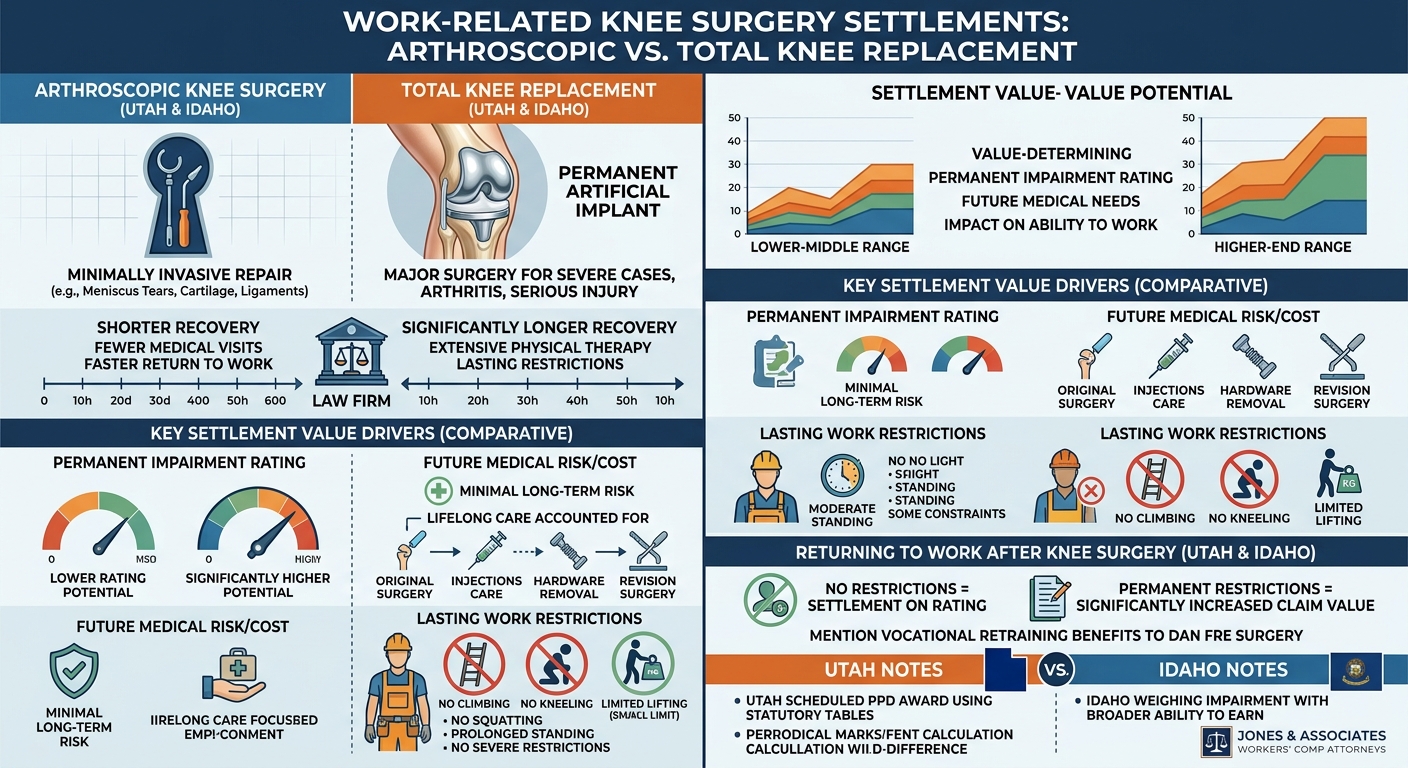
Work-related knee injuries can require several types of surgery, and the procedure you need directly affects the value of your claim. The two broad categories we see most often in Utah and Idaho workers’ compensation cases are:
- Arthroscopic knee surgery — a minimally invasive procedure used to repair meniscus tears, clean out damaged cartilage, or address ligament damage. Recovery is generally shorter, though some workers are still left with permanent restrictions.
- Total knee replacement — a major surgery in which the damaged joint is replaced with an artificial implant, typically required for severe or arthritic knees and often the result of a serious work injury or the long-term breakdown of an injured joint.
Because a total knee replacement is far more invasive and life-altering than an arthroscopic procedure, it generally carries a substantially higher settlement value.
Back Injury Accident Settlement Calculator
Knee Injury Accident Settlement Calculator
Settlement Ranges by Surgery Type
Knee surgery settlement amounts vary widely based on the type of procedure and the permanent impact on your ability to work. Arthroscopic cases generally settle toward the lower end, while total knee replacement cases with their longer recovery, permanent hardware, and lasting restrictions settle for considerably more. The exact figure depends on your impairment rating, your future medical needs, and whether you can return to your prior work.
Why Knee Replacements Settle Higher
Total knee replacements consistently settle for more than arthroscopic procedures, and the reasons come down to permanence and future cost. A replacement joint is a lifelong change that almost always results in a significant permanent impairment rating and lasting work restrictions, both of which increase the value of a claim. Just as important, artificial knees do not last forever many require revision surgery years later so a properly valued replacement claim should account for future medical care, not just the original operation. Because these future costs are easy to underestimate, replacement cases are among the most important to have reviewed by an attorney before settling.
Impairment Ratings & Future Medical Costs
After knee surgery, your settlement is shaped largely by two things: your permanent impairment rating and your anticipated future medical care. Once you reach maximum medical improvement, your doctor assigns an impairment rating that converts your lasting limitation into a dollar figure under Utah and Idaho’s compensation schedules and a higher rating means a larger award. Future medical costs matter just as much, especially after a knee replacement, where you may face injections, hardware removal, or revision surgery down the road. Settling without accounting for these future costs can leave you paying out of pocket later, which is why a careful review of both the rating and the projected care is essential.
Returning to Work After Knee Surgery
Your ability to return to work after knee surgery directly affects how much your claim is worth. If you can go back to your old job with no restrictions, your settlement will generally focus on your impairment rating. But if you are left with permanent restrictions limits on standing, kneeling, climbing, or lifting that reduce your earning capacity or force a career change, the value of your claim rises accordingly. Workers who cannot return to their prior occupation may also be entitled to vocational benefits or retraining. Documenting exactly what you can and cannot do after recovery is one of the most important steps in protecting the value of a knee surgery claim.
Utah & Idaho Notes
Utah and Idaho both compensate permanent knee injuries, but they calculate benefits in different ways. Utah converts your impairment rating into a scheduled permanent partial disability award using statutory tables, while Idaho weighs impairment alongside a broader analysis of how the injury affects your actual ability to earn a living. Each state has its own filing deadlines and its own rules governing future medical care a critical issue for knee replacements that may need revision surgery. Because of these differences, a knee surgery settlement that is fair in Utah may be valued differently across the border in Idaho, making state-specific guidance important.
Frequently Asked Questions
There is no fixed figure; total knee replacements generally settle higher than other knee surgeries because of the significant permanent impairment, lasting restrictions, and likely future revision surgery, but the exact amount depends on your rating, wages, and future medical needs.
Replacements involve a permanent artificial joint, a larger impairment rating, and ongoing future medical costs such as possible revision surgery, all of which add value compared with a less invasive arthroscopic procedure.
It is generally wise to wait until you reach maximum medical improvement and know your permanent restrictions, because settling before you know whether you can return to your prior job risks undervaluing your lost earning capacity.
Hal Davis
Zero out-of-pocket costs, compassionate advocacy, and down-to-earth legal honesty. Our team is dedicated to protecting the rights of hard-working individuals across Utah. Our team provides clear, straightforward guidance throughout every step of your claim—fully backed by bilingual support so language is never a barrier to achieving justice.
*The information provided on this website does not, and is not intended to, constitute legal advice; instead, all information, content, and materials available on this site are for general informational purposes only.